Eureka highlight
Historic Victorian seaport on Humboldt Bay
Eureka's Old Town Historic District preserves the Victorian architecture built during the lumber boom that began in 1850, when the discovery of Humboldt Bay opened the North Coast to settlement and mills.
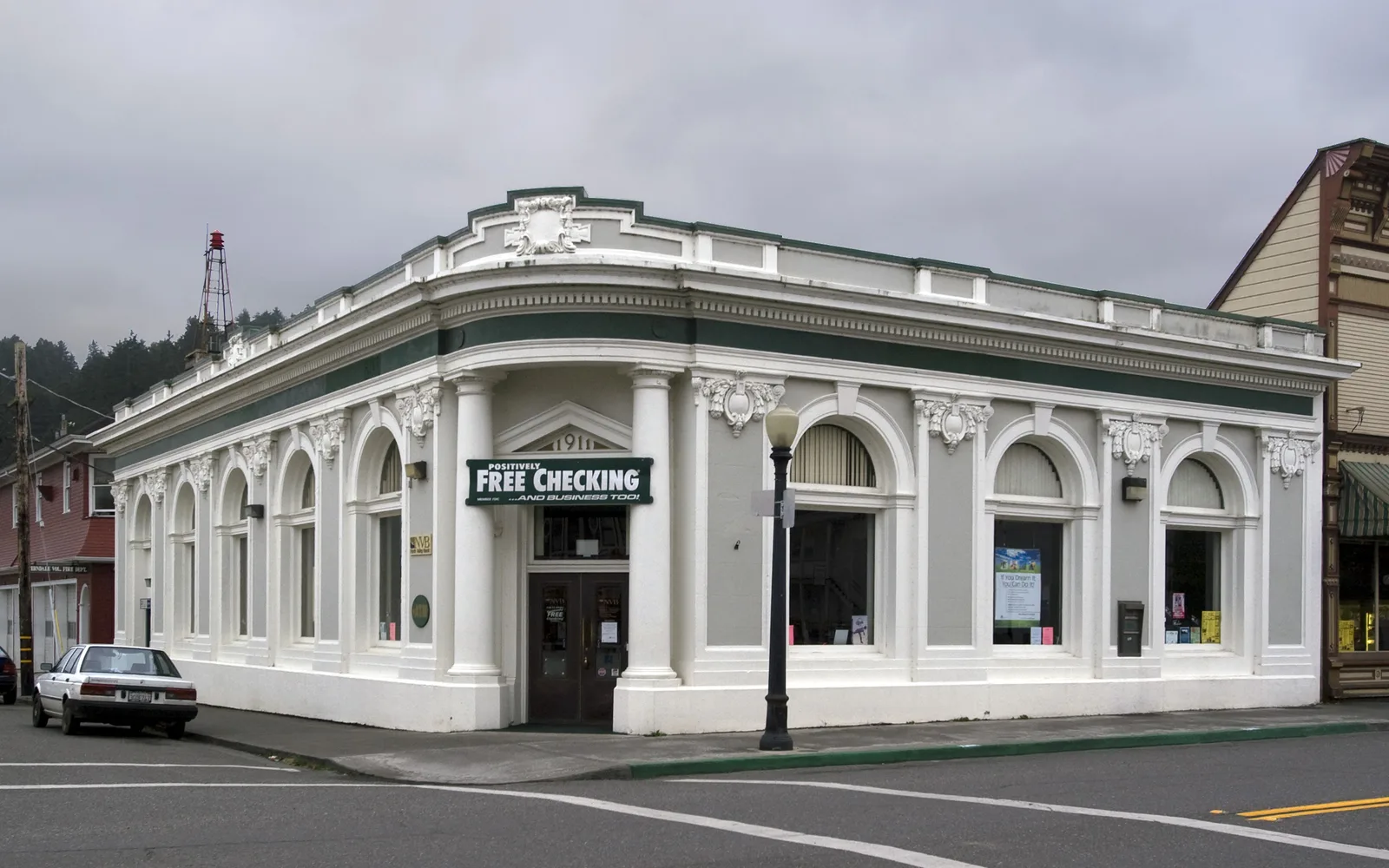
Humboldt Bay was rediscovered on December 20, 1849 by Dr. Josiah Gregg, who was seeking a supply route to Trinity River gold miners. Captain Douglas Ottinger's ship found the entrance to the bay on April 9, 1850, and within weeks sawmills began operating. By 1854, just four years later, Eureka had seven operating mills producing two million board feet of lumber every month. The mills drove settlement, wages, and an influx of craftspeople whose skills built the Victorian streetscapes that remain today.
The Old Town Historic District preserves this era in buildings that line First, Second and Third Streets, a quarter-mile walk through Queen Anne, Classical Revival and Stick architectural styles from the 1880s and 1890s when the lumber industry peaked. The most recognized is the Carson Mansion at 143 M Street, built from 1884 to 1886 as a project to employ skilled craftsmen and mill workers during a slowdown in the timber trade. The Clarke Historical Museum, housed in the landmark Bank of Eureka building, documents the region's Native American heritage, the gold rush, and the lumber boom that shaped the city's character.
For families built on two incomes or a household business tied to the timber, fishing or tourism trades, life insurance bridges the gap between what a household earns now and what it would need if that income ended. A term policy sized to cover a mortgage, children's education, and two or three years of living expenses is the practical version of the promise that built Victorian Eureka: that ordinary people can plan for the people they support.